
Everything you need to know about conveyancing in Kenya — process, legal requirements, costs, and how June Rienye Advocates ensures smooth, secure property transfers.

Introduction
Conveyancing is the legal process of transferring property ownership from one party to another. Whether you are buying a house, transferring land, or selling commercial property, understanding conveyancing is essential to protect your rights, avoid disputes, and ensure the transfer is legally valid.
At June Rienye Advocates, we assist clients with conveyancing services, guiding them through every step — from due diligence to registration — so that property transactions are efficient, transparent, and secure.
What Is Conveyancing?
Conveyancing is more than just signing a document. It involves:
- Verifying that the seller has valid title to the property
- Ensuring there are no encumbrances, liens, or disputes
- Preparing legal documents (sale agreements, transfer documents)
- Paying required taxes and fees (such as stamp duty)
- Registering the change of ownership with the Lands Registry or relevant authorities
Key Laws & Regulations Governing Conveyancing in Kenya
To ensure a lawful conveyancing process, several statutes and regulatory bodies are involved:
- The Land Act, 2012 and Land Registration Act, 2012 — these replaced older laws and unified land registration systems.
- Land Registration (General) Regulations, 2017 — provide rules about forms, registration units, fees and such.
- Land Control Board (LCB) — consent may be required from LCB for certain land transactions, especially agricultural land.
- Ministry of Lands and Physical Planning — oversees registration, title conversion, manages land registries.
Steps in the Conveyancing Process
Here are the typical steps in a conveyancing transaction in Kenya:
- Pre‑Purchase Due Diligence
- Confirm the seller is legal owner via title search at the Lands Registry.
- Check for encumbrances: mortgages, liens, caveats, statutory claims, unpaid rates or lands rent.
- Review land boundaries and maps (including the Registry Index Map, or RIM).
- Negotiation and Sale Agreement / Offer Letter
- Terms of sale: price, mode of payment, timelines, who bears what costs.
- Deposit payment, conditions precedent (e.g., obtaining LCB consent, clearance certificates).
- Obtaining Consent Where Necessary
- Agricultural (or specific zones) land requires consent from the Land Control Board.
- Other permissions or regulatory approvals depending on location and type of property.
- Document Preparation
- Prepare the sale/purchase agreement.
- Draft transfer instruments and other documents required for transfer.
- Secure identification and title documents of both parties.
- Payment of Stamp Duty and Fees
- Stamp duty (as required under the Kenya Revenue Authority)
- Legal fees for attorneys
- Registration fees, consent fees, valuation fees (sometimes), clearance certificates
- Submission & Registration
- Submit the transfer documents (properly executed) to the Lands Registry.
- Registration of the new owner in the register.
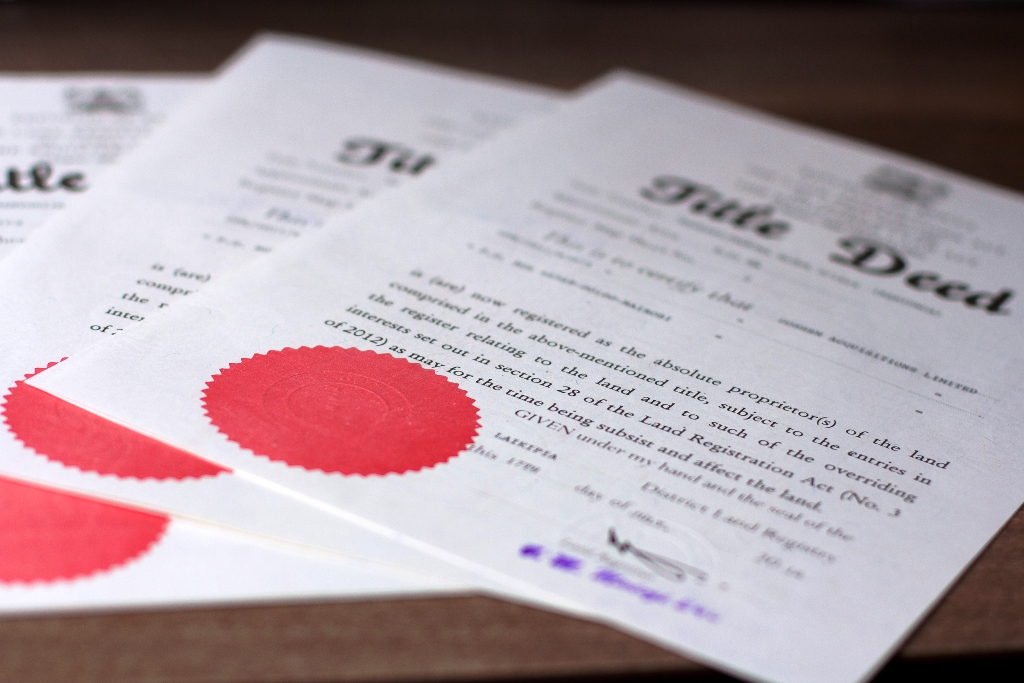
- Once registered, issuance of new title deed / certificate of title under the appropriate regime.
- Completion & Handover
- Ensure all outstanding fees or taxes are cleared.
- Collect the new title deed.
- Transfer possession / physical handover where needed.
Common Challenges & Pitfalls to Avoid
- Lack of proper due diligence — buying without verifying ownership or existence of encumbrances.
- Missing or incorrect documentation causing delays.
- Failure to obtain required consents (LCB), leading to invalid or delayed transfers.
- Disputes over boundary or maps, especially where RIMs or surveys are outdated.
- Underpayment of duties or taxes, or failing to budget for all conveyancing costs.
- Fraud risk, particularly: forged title deeds; sellers without proper authority.
How Much Does Conveyancing Cost?
Costs can vary depending on location, property value, and complexity. Typical cost elements include:
- Attorney’s legal fees — usually a percentage of property value (negotiable, based on firm’s schedule).
- Stamp duty (percentage based on property value and whether urban/rural).
- Valuation fees if required.
- Registration fees at Lands Registry.
- Fees for obtaining consents, clearance certificates, or surveys.
At June Rienye Advocates, we provide upfront estimates, transparent billing, and ensure you know all likely costs before starting the conveyancing process.
Why Use a Law Firm Like June Rienye Advocates for Conveyancing?
At June Rienye Advocates, we offer:
- Expert knowledge of Kenyan land law, registration processes, and regulatory requirements.
- Assistance with preparation, verification, and review of all documents.
- Access to trusted surveys, valuation, and other ancillary professionals.
- Efficient handling of consent processes and dealing with regulatory authorities.
- Protection against risks (fraud, boundary issues, latent title defects).
Frequently Asked Questions (FAQs)
Q: Can foreign nationals own land in Kenya?
- Foreign persons can acquire leasehold interest; freehold ownership especially of agricultural land is restricted under Kenyan constitution/statutes.
Q: What is a Certificate of Title vs Title Deed?
- Under newer land laws (Land Registration Act), older title deeds are being replaced by certificates of title in registration units. Certificates of title offer more standardized formats, some digital processes.
Q: How long does the conveyancing process normally take?
- It depends on speed of consent, completeness of documents, registration office backlog. Could range from a few weeks to several months.
Conclusion
Conveyancing is essential to safe and legally valid property transactions. It protects buyers, sellers, developers, and all stakeholders. Mistakes in the process can be costly or lead to disputes.
With the expertise and guidance of June Rienye Advocates, you get clarity, legal protection, and a smoother transfer of property ownership.
Contact Us
For professional conveyancing services or queries:
June Rienye Advocates
📞 Call: +254 789 555 555
📧 Email: info@junerienyeadvocates.com
🌐 Visit: www.junerienyeadvocates.com